How to choose the right tool for drilling into tiles, flooring, glass and plastics
When drilling into tiles, flooring and glass, the decisive factor is not machine power as with concrete or masonry, but drilling control and choosing the correct tool type so the finished surface is not damaged. The selection is therefore guided mainly by the material type, hole diameter and the required cleanliness of the cut.
1️⃣ What hole do you need and what material are you drilling into
First, clarify what exactly you are drilling and how large the hole needs to be.
2️⃣ How much emphasis do you place on the cleanliness of the hole
With tiles and flooring, the appearance of the resulting hole plays a major role, especially for visible installations.
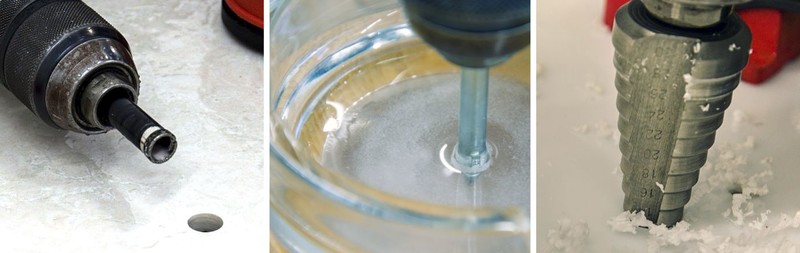
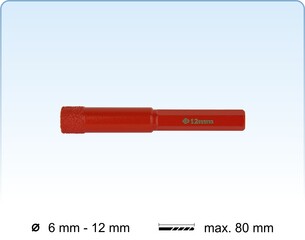
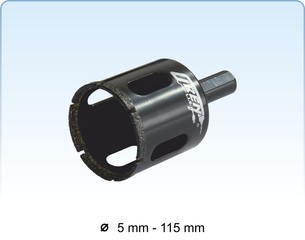
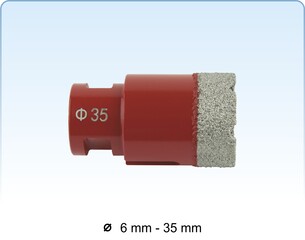
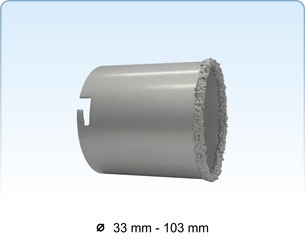
- If you need a clean and precise hole without burrs or cracks, diamond hole saws are usually chosen.
- Depending on how demanding the work is, the choice is between:
- dry diamond hole saws – for quick installations,
- wet diamond hole saws – for more demanding drilling and longer tool life.
3️⃣ What tools you have available
Tools in this category are designed for non-hammer drilling.
- Cordless screwdrivers and hand drills
→ commonly fully sufficient for installation work and smaller hole diameters
- Impact drills
→ can be used if the hammer action is switched off
- Angle grinders
→ some diamond hole saws are also available with a mount for an angle grinder, especially for drilling larger diameters into hard tile
Logic towards the branching below
Once you are clear on the material, hole diameter and drilling method, you can continue by selecting a specific group:
Where and how drilling into tiles, flooring, glass and plastics is used in practice
Drilling into tiles, flooring, glass and plastics is mainly done during installations and finishing work, when the surface is finished and the resulting hole remains visible.
Typical real-world situations
- Installations in bathrooms and kitchens
Fixing shelves, cabinets, mirrors, holders, shower screens, grab rails or bathroom accessories directly into tiles and flooring.
- Electrical installations and small assemblies
Holes for sockets, switches, lights or cable clips in tiled walls.
- Plumbing work
Penetrations for pipes, drains, traps or taps where larger diameters need to be drilled into tiles or wall tiles.
- Working with glass
Drilling holes into glass panels, shelves, display cases or design elements where precision and a clean result are essential.
- Plastic materials
Drilling into plastic sheets, covers, trims or technical parts during installation, modification or production.
These tools are used wherever it is necessary to make a hole in a finished material without damaging it, whether for functional or aesthetic reasons.
How to work when drilling into tiles, flooring, glass and plastics
Drilling into tiles, flooring, glass and plastics is fundamentally different from drilling into concrete or masonry. It is not about overcoming a hard material by force, but about controlled material removal to avoid damage.
While hammer action and higher pressure are common when drilling into concrete, this approach is unsuitable for these materials and often leads to cracking, chipping or ruining the surface.
How the work differs from drilling into concrete and masonry
- drill without hammer action,
- work with lower pressure,
- prioritise control over speed,
- keep in mind the material is often finished and visible, with no room for repair.
The goal is not to “break” the material, but to create a hole with a clean edge and without damaging the surrounding area.
Practical drilling recommendations
- Always drill without hammer action; hammering on these materials leads to cracking or chipping the surface.
- Use steady pressure, do not force the tool and let it remove material gradually.
- Adjust drilling speed to the material; for glass and plastic choose lower RPM to prevent cracking, melting or deforming the hole.
- For larger diameters, expect tool heating, which can negatively affect both the tool and the material surface.
- Do not force the tool through the material, especially with hard tiles and flooring – drilling control is more important than speed.
If a clean hole edge is important to you, choose a solution that:
- minimises material breakout at the hole edge,
- reduces cracking and burr formation,
- ensures even material removal around the full circumference.
In practice, this means choosing diamond hole saws, or using cooling for more demanding work where tool overheating and surface damage are risks.
Risks and hazards when drilling
- with tiles, flooring and glass there is a risk of sudden material cracking,
- if the surface is damaged, sharp edges and fragments may occur,
- with plastics there is a risk of snagging or material deformation due to an unsuitable method,
- damage to a finished surface is usually irreversible.
How does the range branch further?
The range of drill bits and hole saws for tiles, flooring, glass and plastics is divided to match the material you are working with and the requirements for accuracy and hole cleanliness. The individual groups are based on typical installation situations and the different properties of these materials.
- Drilling into tiles and wall tiles
Designed for drilling into ceramic wall tiles, flooring and other hard surfaces. It includes tools for smaller installation holes as well as solutions for larger penetrations where a clean edge and minimising the risk of cracking are important.
- Glass drill bits
A separate group for very fragile materials. Tools in this section are designed for precise drilling into glass, where drilling control and maximum gentleness to the material are key.
- Drilling into plastic
Includes solutions for drilling into various types of plastics, from technical parts to installation components. The selection here takes into account the risk of material deformation and the requirement for a clean and functional hole.
Thanks to this structure, you can quickly orient yourself and choose the tool group that matches both the material and the type of work you need to do.
Hide