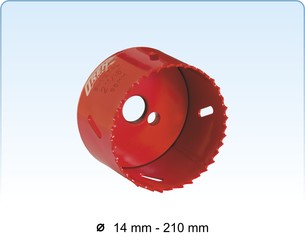
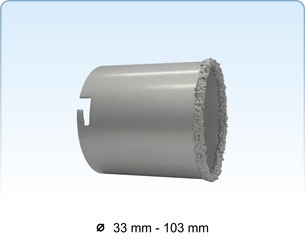
How to choose the right core drill bit
Core drill bits come into play when it is necessary to drill larger diameters than twist drill bits can handle. Compared to twist drill bits, however, they have a depth limitation determined by the design of the core bit itself – they are not intended for deep drilling, but for creating a precise hole of the required diameter.
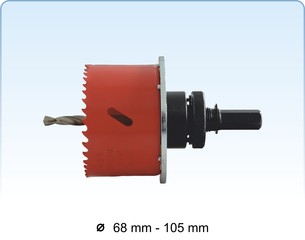
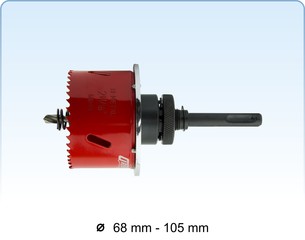
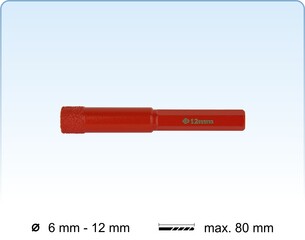
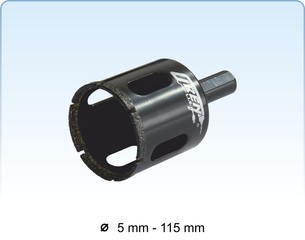
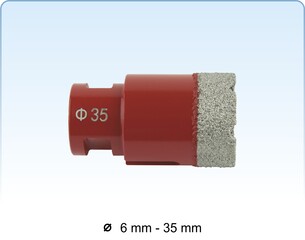
The basic selection starts with the material you will be drilling into. One type of core bit is used for concrete and masonry, another for ceramic wall tiles and floor tiles, and another for drywall.
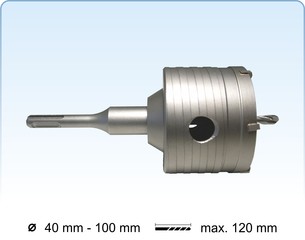
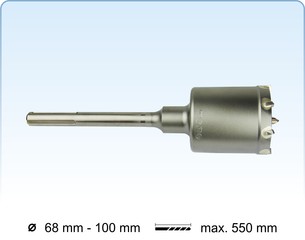
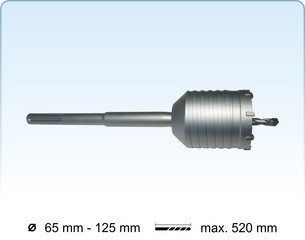
The next step is choosing based on the machine you have available and the specific application. Some core bits are intended for impact drills or SDS-plus rotary hammers, others for more powerful SDS-max hammers or specialized systems. It is the combination of material, diameter and machine type that determines which core bit is suitable for the job.
With core drill bits, you always need to consider that tool quality has a fundamental impact on the result and on service life. At first glance, some core bits may look similar, but the differences become apparent very quickly during drilling.
Where and how core drill bits are used in practice
Core drill bits are used wherever a larger-diameter hole with a clean edge is required. Typically, this includes installing electrical junction boxes, penetrations for water, heating or ventilation lines, or preparing holes for technical equipment.
In practice, you will encounter very different conditions – from drilling into solid concrete through hard ceramic tiles to lightweight drywall structures. That is why it is important to choose a core bit that matches the specific material and drilling method, and not to use a universal solution where it could damage the tool or the substrate.
How to work with core drill bits
Working with a core drill bit differs from standard drilling with a twist drill bit. A core bit does not remove material across the entire area of the hole, but only along its perimeter, so it is important to follow the correct procedure.
Always choose the appropriate speed and drilling method according to the core bit type. Some core bits must be used without hammer action, while for others hammer action plays a key role. Do not push with force – let the tool and the machine do the work. Excessive feed pressure leads to unnecessary wear and a poorer hole finish.
For larger diameters, it is advisable to drill gradually, regularly pull the core bit out of the hole and remove the drilled material. Specific recommendations for the drilling procedure, speeds and method of use can always be found for each core bit type in the following subcategories, depending on which variant you choose. Proper technique extends the core bit’s service life and ensures smooth progress.
What are the limitations of drilling with core drill bits
Core drill bits are not a universal solution for every type of drilling. They are intended primarily for creating larger-diameter holes and do not replace standard twist drill bits for small holes.
Each core bit type has its own purpose and limitations defined by the material it drills into and by its method of use. Using the wrong core bit type can lead to rapid wear or damage to the drilled surface. Therefore, it is always important to follow the recommended use for the specific material.
How is the range further structured?
The core drill bit range is clearly divided by the material you will be drilling into. Within each group, you then choose the specific core bit type based on the machine you have available and the working method.
After selecting the specific group, you then choose a suitable core bit type, diameter and shank system according to the specific application.
Hide Description