How to choose a plasterboard hole saw
Choosing a plasterboard hole saw is easier than choosing for hard building materials. You do not deal with hardness, but mainly with the exact hole diameter, the arbor type, and possible work in mixed constructions (e.g., with a metal stud/profile).
1️⃣ What hole diameter do you need?
Most common applications:
- installation of electrical back boxes (standard installation diameters, most commonly 68 mm),
- holes for recessed ceiling lights,
- ventilation openings,
- cable and technical pass-throughs.
With plasterboard, accuracy is essential. The hole saw diameter should match the installation size of the component being fitted – no extra “allowance” is added.
For electrical boxes, an exact installation diameter is used (e.g., 68 mm).
For lights and other components, the decisive value is the “cut-out diameter” specified by the manufacturer, not the overall outer diameter of the trim.
A hole that is too large can worsen fixing strength and lead to the need for repair.
2️⃣ Which arbor/attachment do you need?
Plasterboard hole saws are offered by arbor type:
Hex or round shank
→ for standard drills and cordless drills.
The most common choice for interior installation work.
SDS-plus
→ for hammers with the option to switch off hammer action.
Suitable where more robust tools are used or where the construction includes a firmer backing.
When drilling/cutting plasterboard, always work without hammer action, regardless of the arbor type.
Where and how plasterboard hole saws are used in practice
Plasterboard hole saws are used mainly for installation and finishing work indoors.
Typical situations:
- installing electrical back boxes in partitions and suspended ceilings,
- installing recessed lights,
- preparing openings for ventilation,
- technical pass-throughs in lightweight constructions.
The work is usually done in a finished interior, where a clean cut and minimal damage to the surrounding area matter. Plasterboard is a soft material, so high feed pressure or hammer action is not needed – stable tool guidance and accurate sizing are more important.
How to work with plasterboard hole saws
Working with plasterboard is technically simple, but it requires accuracy and control.
Basic rules:
- always work without hammer action,
- use medium speed (very high speed may cause heating if you hit a metal stud/profile),
- do not force it – the material cuts very easily,
- keep the tool perpendicular to the surface so the hole is straight.
Drilling/cutting procedure
First, mark the hole center precisely.
Place the hole saw perpendicular to the surface and start cutting smoothly, without sudden pressure.
After breaking through the board, slightly reduce feed pressure to avoid tearing out the back edge of the hole.
If there is a metal stud/profile behind the board:
- expect a short-term increase in resistance,
- use lower feed pressure,
- monitor hole saw heating.
Typical risks
- tearing the paper facing due to excessive pressure or hammer action,
- enlarging the hole by wobbling the tool,
- damaging hidden services behind the board.
Plasterboard hole saws are not intended for solid masonry materials or concrete structures.
⚠ Note on double boards and metal studs/profiles
If you cut through two layers of plasterboard or contact a metal load-bearing stud/profile, expect higher resistance.
In such cases, work with lower feed pressure and monitor heating. For regular work that includes metal, it is better to use a quality bi-metal HSS hole saw, or consider an HSS-Co version, which is primarily intended for metal drilling/cutting.
How does the selection continue?
The subcategory “Hole Saws for Plasterboard” includes complete solutions for cutting openings for electrical boxes, as well as individual bi-metal hole saws and related accessories.
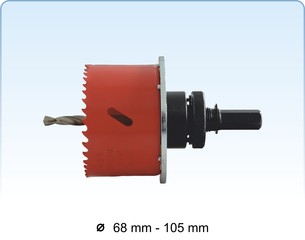
Hole saws for electrical boxes – hex shank
A complete solution in the most common installation diameters.
Includes a bi-metal HSS hole saw, the matching arbor, and a special countersinking spacer ring.
The countersinking spacer ring allows you, in one step, not only to cut the hole but also to create a recess for the flange of the electrical box so it does not protrude above the board surface after installation.
For standard drills and cordless drills.
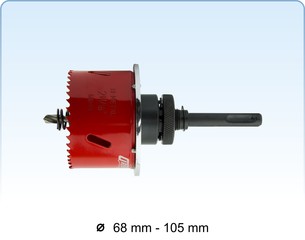
Hole saws for electrical boxes – SDS-plus
The same concept as above, designed for SDS-plus machines (always without hammer action).
Suitable where an SDS-plus tool is used instead of a standard drill.
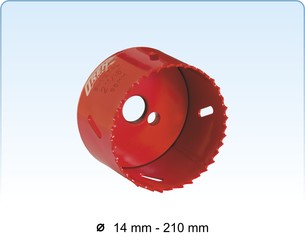
Bi-metal HSS hole saws
Individual hole saws in a wider diameter range.
Suitable not only for plasterboard but also for wood, plastic, and other light materials.
Used together with a matching arbor.
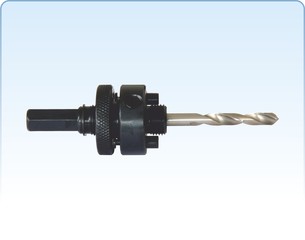
Hole saw drive adapters
Separate arbors designed to connect the hole saw to the machine.
The arbor includes a pilot drill bit that helps guide the hole saw accurately and start cutting.
When selecting an arbor, proceed as follows:
- first choose the diameter of the bi-metal hole saw,
- then select the matching arbor according to your machine type (hex/round shank / SDS-plus).
The arbors are grouped by hole saw diameter.
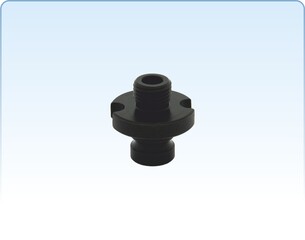
Quick Change adapters for hole saws
They screw into the hole saw thread and allow quick snap-on connection to the 5102-8 arbor.
This turns a standard hole saw into a hole saw with the Quick Change system, significantly speeding up tool changes.
Ideal for professionals who frequently switch smaller diameters and want faster work.
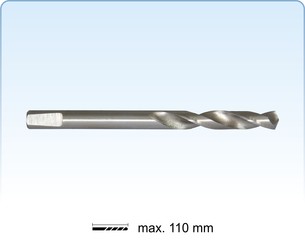
Pilot drill bits for bi-metal hole saws
Replacement pilot bits for bi-metal hole saw arbors.
They ensure accurate guidance when starting the cut.
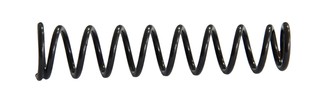
Spring for bi-metal hole saw
Helps eject the cut-out material from the hole saw and reduces clogging.
Hide Description