How to choose the right step or tapered drill for metal
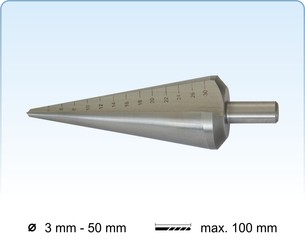
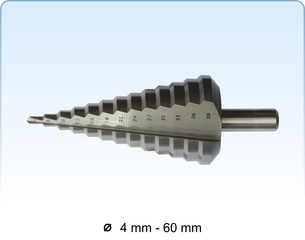
When choosing, the most important thing is to decide whether you need to bring the hole to a specific precise diameter, or whether the ability to enlarge and fine-tune the hole gradually is more important. If you want to work with clearly defined sizes, a step drill is usually the better choice. If you need smoother transitions between diameters, a tube and sheet drill makes more sense.
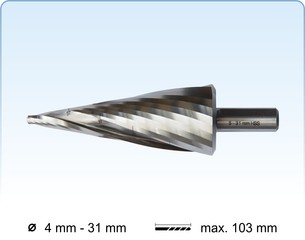
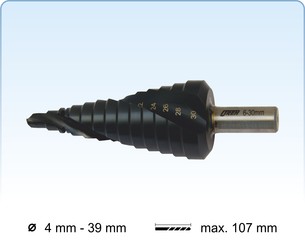
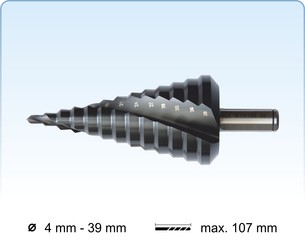
The choice also depends on the difficulty of the work and the drilled material. Step drills are available in standard HSS versions, variants with spiral flutes, and versions with TiAlN coating or HSS-Co + TiAlN for more demanding applications. Tube and sheet drills are available in standard, fluted, or set versions. Both groups are intended for thin-walled materials, but they differ in working characteristics and the way they guide you to the final hole size.
Where and how step and tapered drills for metal are used
Both types of drills are mainly used for drilling into sheet metal, tubes, profiles, and other thin-walled materials. They are widely used in electrical cabinet manufacturing, installation work, metalworking, maintenance, and general workshop applications. They are ideal wherever you need not only to drill a hole, but also enlarge or adjust it without frequently changing tools.
Step drills are mainly used when you need to enlarge a hole in clearly defined steps and maintain a specific diameter. Tube and sheet drills are better suited for gradually enlarging and adjusting holes according to current requirements. This is the main difference between the two groups.
They can be used in hand drills, cordless drills, and drill presses with a chuck. For more precise work and better tool guidance, the use of a drill stand or pillar drill is recommended.
How to work with step and tapered drills for metal
When drilling with both types of drills, work smoothly without excessive pressure and adjust the speed according to the material and hole size. For more demanding materials or larger diameters, it is recommended to use cutting oil, cutting paste, or another suitable cutting lubricant that reduces friction, limits overheating, and helps extend tool life.
With step drills, you will appreciate the precise guidance at each step, while tapered drills offer smooth transitions between diameters. Variants with spiral flutes or fluted designs generally provide smoother operation and better chip removal. For accurate results, always ensure the workpiece is securely clamped and the drill is guided steadily.
It is also essential to wear safety glasses and handle chips and the workpiece carefully after drilling.
How does the selection continue?
Step and tapered drills for metal in this category are divided according to drill type and application:
- Step drills
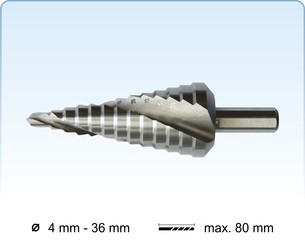
Suitable for drilling and enlarging holes to clearly defined diameters. Ideal wherever you need to work in individual steps and maintain better control over the final size.
- Tube and sheet drills
Suitable for smoothly enlarging and adjusting holes in thin-walled materials. Ideal wherever you need to move continuously between hole sizes according to specific requirements.
- Sets of step drills and Tube and sheet drills
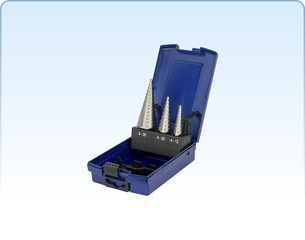
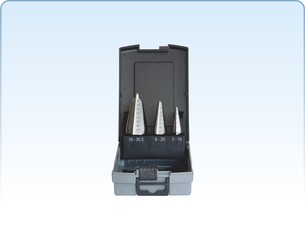
A practical solution for workshops and installation work where you need multiple tools or size ranges in one package.
Hide Description