How to choose the right concrete core drill bit
When choosing a concrete core drill bit, the key factor is primarily the type of machine you will be working with. The core bit design, shank system, service life, and suitable use are all determined by it.
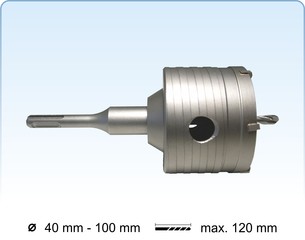
SDS-plus core drill bits
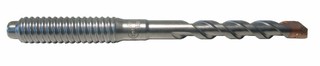
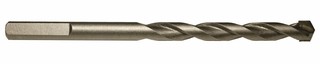
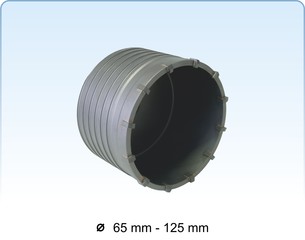
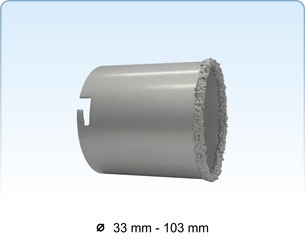
Core drill bits with SDS-plus shank are currently the most common choice for drilling holes in concrete and masonry. Many versions are available on the market that may look the same at first glance, but differ significantly in build quality, materials used, and durability during drilling.
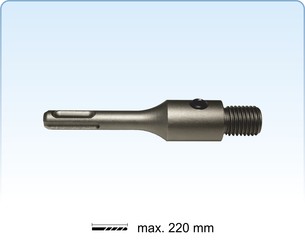
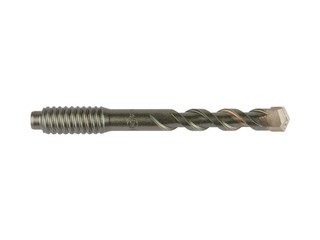
This is exactly where the difference between hobby and professional tools is the least visible, but the most noticeable in practice. Our SDS-plus core drill bits are professional-grade, designed for use with pneumatic hammer action and long service life. The core bit is connected to the shank by an M16 thread, which ensures a firm and stable connection during drilling.
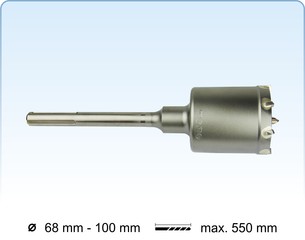
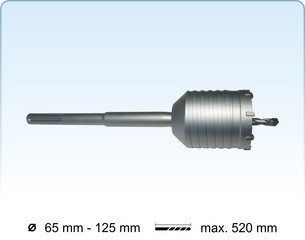
SDS-max core drill bits
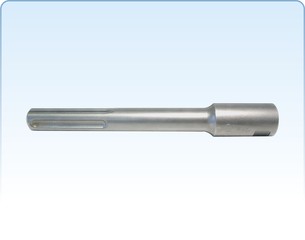
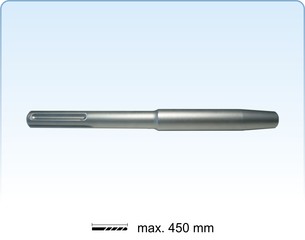
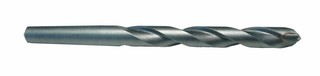
For larger diameters, tougher conditions, and professional use, SDS-max core drill bits are used. In our assortment, one of the best-selling versions is the core bit with MK (Morse taper) shank, which represents the most cost-effective solution for heavier drilling in concrete and masonry.
Other SDS-max core bit types in the range are based on a threaded connection between the core bit and the shank. This design is used for more robust and durable variants intended for higher loads and long-term use.
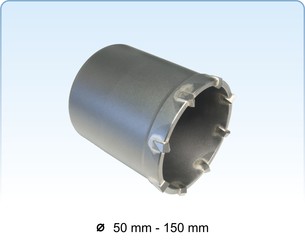
VARIANT system core bits
The highest level in terms of durability and service life is represented by VARIANT system core bits. These core bits are designed for extreme loads, repeated use, and long service life. In practice, they also prove themselves in tool rental fleets, where the tool is exposed to long-term and often rough operation.
Where and how concrete core drill bits are used in practice
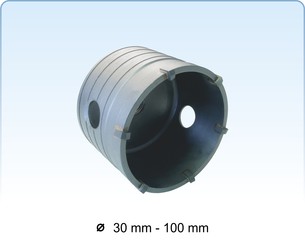
Concrete core drill bits are mainly used in construction, assembly, and installation work where it is necessary to create a larger-diameter hole with a clean and precise edge. Typically, this includes installing electrical junction boxes, penetrations for cables, pipes and piping, or preparing holes for technical equipment in walls and ceilings.
The most common use of concrete core bits is in electrical installations. The standard is holes for junction boxes with a diameter of 68 mm, but among the most frequently used are also 80 mm core bits. These provide a larger installation allowance and are used for larger junction boxes, combined runs, or in situations where more space is needed for convenient seating of the box and subsequent patching of the opening. Other common diameters are roughly in the range from 40 to 100 mm, depending on the type of installation.
Core drill bits come into play where drilling with a twist drill bit would be inefficient or would unnecessarily damage the surrounding material. Compared to twist drill bits, they allow you to create a precise hole without chiseling and additional finishing. At the same time, it is important to consider that core bits have a limited working depth and are not intended for deep or long through-drilling.
In practice, concrete core drill bits are most often used with SDS-plus or SDS-max rotary hammers, depending on the required diameter and the hardness of the material. For standard installation holes, SDS-plus is fully sufficient, but for larger diameters or drilling in hard concrete, the advantages of more powerful machines become obvious very quickly – drilling progresses more smoothly, the machine is not unnecessarily overloaded, and the job has a better pace.
Once you move to larger diameters, tougher conditions, or repeated drilling, it pays off to choose the appropriate combination of machine and core bit. The correct tool choice is crucial for core drilling, both for the work result and for the service life of the core bit itself.
How to work with concrete core drill bits
Concrete core drill bits are used in combination with impact drills or rotary hammers, most commonly with SDS-plus or SDS-max systems. Unlike twist drill bits, they do not remove material across the entire area of the hole, but only along its perimeter. That is why they require a different approach and the correct machine choice.
With most core bits designed for concrete, work is performed with hammer action, especially in hard concrete and masonry. The pneumatic hammer action of a rotary hammer enables smooth drilling progress without the need for excessive feed pressure. The core bit should advance mainly thanks to the hammer energy and stable machine guidance, not by operator force.
The following recommendations are worth considering if you want the work to run smoothly, with a good result, and without unnecessary damage to the core bit, the machine, or the drilled material.
Recommendations for the drilling procedure
Hammer action and its role in practice
With concrete core drill bits, hammer action is essential especially when drilling into harder materials. If you use an SDS-plus or SDS-max rotary hammer, drilling happens primarily due to hammer energy. Excessive feed pressure will not speed up the work and can lead to overheating or damage to the core bit.
Guiding the core bit and feed pressure
Hold the machine stable and perpendicular to the drilled surface. Do not push on the core bit – let it work with its own cutting edge and the machine’s hammer action. Proper technique means smooth guidance without wobbling and without trying to force your way through the material.
Gradual drilling and material removal
When drilling, it is advisable to work gradually. Pull the core bit out of the hole regularly so the drilled material can be released. If material accumulates inside the core bit, drilling slows down, friction increases, and the tool overheats.
Work in hard concrete and masonry
When drilling into hard concrete or areas with varying structure, it is important to maintain smooth progress and not try to overcome resistance by force. If drilling does not progress evenly, it is advisable to check whether the selected core bit is suitable or consider using a more powerful machine.
Rules for work
- Do not push on the core bit – let the hammer action and the tool design do the work.
- Work smoothly and without wobbling the machine.
- Pull the core bit out of the hole regularly so it does not clog with drilled material.
- If drilling does not progress smoothly, check whether the selected core bit type is suitable or whether the machine has enough power.
- For larger diameters, work patiently and without unnecessary rushing.
Safety notice
- Use safety glasses, and for longer work also hearing protection.
- Before drilling into walls and ceilings, always check whether electrical cables, water, or gas lines run in the area.
- Hold the machine firmly with both hands, especially when the core bit bites.
- When drilling overhead or into floors, take extra care due to falling material and dust.
- Regularly check the condition of the core bit – a damaged or heavily worn core bit increases the risk of injury and machine damage.
What are the limitations of drilling with concrete core drill bits
Concrete core drill bits are not intended for deep drilling or for creating through-holes at great depths. Their design is optimized for drilling larger-diameter holes with limited depth.
Using an unsuitable core bit or an incorrect procedure can lead to rapid tool wear or damage to the drilled material. For more demanding applications, it is always important to choose a core bit that matches the machine type and the material.
How is the range further structured?
The concrete core drill bit range is first divided by the machine type and shank system you will be working with. This step is crucial when selecting.
- SDS-plus core drill bits
Core bits with SDS-plus shank are intended for standard assembly and installation work. They are used with SDS-plus rotary hammers and cover the most common diameters for electrical junction boxes and smaller penetrations. In this group, you mainly choose according to the required diameter and the specific application.
- SDS-max core drill bits
Core bits with SDS-max shank are intended for larger diameters, tougher conditions, and professional use. This group is further divided by the core bit design:
- Disassemblable SDS-max Core Drill Sets
a system consisting of interchangeable core bits and shanks. It allows you to combine multiple diameters with one shank and is a universal solution for a wide range of tasks.
- Compact SDS-max Core Drill Bits
core bits forming one solid unit with the shank. They offer higher stability, less play, and better hammer energy transfer, which is especially noticeable in more demanding drilling.
- VARIANT system core drill bits
the most durable design within the SDS-max core bit range. They are designed for extreme loads, repeated use, and long-term operation. Within the VARIANT system there are several core bit types depending on design and purpose, always with an emphasis on maximum service life.
After selecting the specific branch, you then choose the diameter and core bit design according to the specific job.
Hide Description